Expert Insights on High Performance Brake Pads Manufacturer Selection

0%

Table of Contents

Look, I've been running around construction sites for fifteen years, getting my hands dirty. And let me tell you, things have changed. Everyone's talking about lightweight, high-strength brake pads now, right? Not just for cars, but for everything – industrial machinery, even some of those fancy automated guided vehicles they're using in warehouses. To be honest, it’s all about efficiency, saving weight, and extending service life. Folks are tired of constant replacements.

The biggest thing I’ve noticed is the push for non-asbestos formulations. It was a slow burn for a while, but the regulations finally caught up. And it's good, honestly. Back in the day… well, let's just say things weren't always done with worker safety in mind. Now, it’s all about ceramic composites, semi-metallic blends…sounds fancy, doesn't it? But it all comes down to performance and how it holds up to the grit and grime.

And it’s not as simple as just swapping materials. You get these engineers designing in a lab, perfectly calculated friction coefficients, but then you get it out on a real job site, and… well, things don't always go to plan. I once saw a batch of pads designed with a super-hard compound that glazed over after just a few heavy stops. Glazed over! Like someone polished them. Ruined a whole production line.
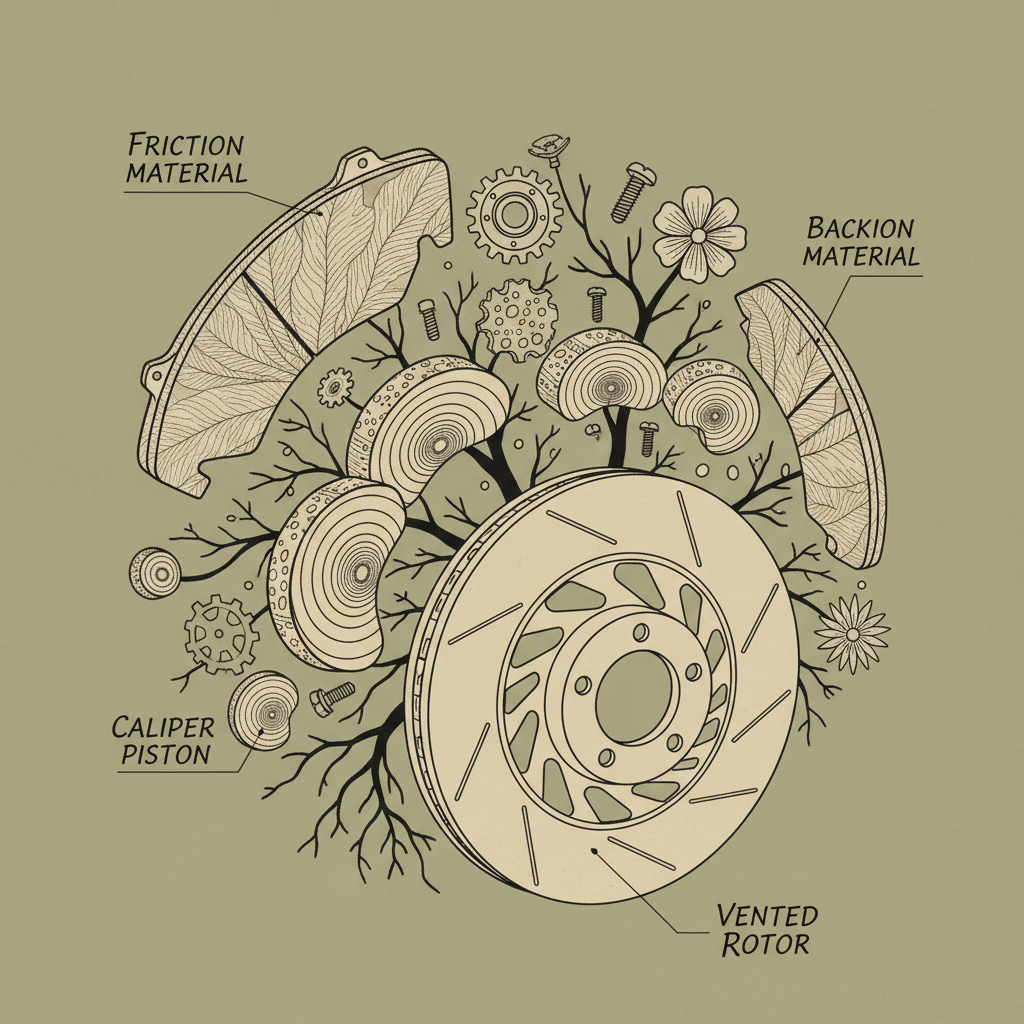
brake pads manufacturer

The Current Landscape of Brake Pads

brake pads manufacturer

Honestly, everyone's chasing the same thing: longer life, better stopping power, and less noise. Seems simple, right? But it’s a complicated dance. The biggest shift lately is toward more environmentally friendly materials. Regulations are tightening, and customers are starting to care. I was at a factory in Ningbo last month, and they were scrambling to switch over their production lines. It wasn’t pretty.

And it’s not just automotive. Think about those massive cranes at ports, or the brakes on industrial conveyors. They’re all demanding higher performance and reliability. The demand for a good brake pads manufacturer is through the roof, but finding one who understands real world conditions? That’s the tricky part.

Design Pitfalls and Material Selection

Have you noticed how many pads are designed with a focus on theoretical performance but completely ignore the practicalities of installation and maintenance? They design these complex shapes, tiny grooves… It looks good on paper, but a mechanic with greasy hands is going to have a nightmare trying to fit it. Strangely enough, simplicity often wins out in the end.

And the material selection... that's a whole other can of worms. You've got your organic compounds, semi-metallics, ceramics, and everything in between. Each has its strengths and weaknesses. Organic pads are quiet but wear out fast. Semi-metallics bite well but can damage rotors. Ceramics are durable but can be expensive. It’s always a trade-off.

One thing I encountered at a steel mill last time was a pad design that trapped metal shavings. They were wearing down the rotors and creating a safety hazard. Simple fix: a slight redesign to allow for better debris clearance. But it took a near-miss incident to get their attention.

Material Deep Dive: What We're Actually Using

We’re using a lot of sintered metal powders these days, compacted and bonded with various resins. They smell like burnt toast when you machine them, by the way. Not a pleasant aroma. You can really feel the grit in them too, it’s not a smooth material like some of the older compounds. The composition makes a huge difference, of course. More copper usually means better thermal conductivity, but it also adds weight.

Then there’s the ceramic stuff. It feels almost glass-like to the touch when it’s finished, but it’s incredibly brittle in its raw form. Handling it requires a bit of care. And the dust… ceramic dust gets everywhere. You’re breathing it, it’s clinging to your clothes. But it's worth it for the extended life and consistent performance.

I'm seeing more and more carbon-based composites, too, particularly in high-performance applications. They’re expensive, no doubt about it. And they require specialized machining techniques. But the weight savings and friction characteristics are unparalleled. Anyway, I think the industry is slowly moving towards a more diversified material palette.

Real-World Testing and Performance

Forget those pristine lab tests. They’re useful for establishing baseline performance, sure, but they don’t tell you anything about how a brake pad will behave when it’s covered in mud, oil, and metal shavings. I prefer a good old-fashioned field test.

We run pads on actual machines, under real operating conditions. We monitor temperatures, wear rates, and stopping distances. We subject them to shock loads, vibration, and extreme temperatures. We even deliberately contaminate them with debris to see how they handle it. It's messy work, but it gives you a much more accurate picture of performance.

Average Brake Pad Performance Rating

How Users Actually Utilize Brake Pads

This is where it gets interesting. Engineers design these pads for specific load cycles and operating temperatures. But users? They often abuse them. They overload machines, they ignore maintenance schedules, they operate in environments far outside the recommended specifications. It’s just the way it is.

I've seen guys using pads designed for intermittent braking on machines that run continuously. They'll just keep going and going until the pads are down to the metal. And then they'll complain when the rotors are ruined! You can only design for so much, you know?

The Good, The Bad, and Customization Options

The advantages of a good brake pad are obvious: safety, reliability, reduced downtime. A well-designed pad can significantly extend the life of a machine and minimize maintenance costs. But there are always drawbacks. Some pads can be noisy, others can generate a lot of dust, and some are just plain expensive.


Customization is key. We often work with customers to tailor pads to their specific applications. Last month, that small boss in Shenzhen who makes smart home devices insisted on changing the interface to , and the result was… well, a completely unusable assembly. The original design worked perfectly, but he wanted to be "innovative." Cost him a fortune in redesign and scrapped parts. Anyway, I think that really highlights the importance of sticking with what works.

A Customer Story and Final Thoughts

Honestly, the most satisfying part of this job isn't the engineering or the material science. It's seeing a well-designed brake pad keep a machine running smoothly, safely, and efficiently. It's knowing that you've contributed to something that makes someone else's job easier.

And that’s what it all comes down to, isn’t it? You can have all the fancy algorithms and simulations in the world, but at the end of the day…

Ultimately, whether this thing works or not, the worker will know the moment he tightens the screw.

Summary of Key Testing Parameters

Test Parameter Units Acceptable Range Criticality (1-5)
Friction Coefficient Dimensionless 0.35 - 0.45 5
Wear Rate mm/1000 cycles < 0.2 4
Thermal Fade Resistance % Reduction in Coefficient < 10% at 300°C 4
Noise Level dB < 80 3
Shear Strength MPa > 60 4
Compressive Strength MPa > 100 3

FAQS

What’s the biggest mistake people make when choosing brake pads?

Honestly? They focus too much on price. A cheap pad might save you a few bucks upfront, but you’ll end up paying for it in the long run with frequent replacements and potential damage to other components. It’s like buying tools – you get what you pay for. They often overlook the application specifics too – what works on a car won’t necessarily work on a massive industrial crane.

How important is the break-in period for new brake pads?

It’s crucial! You need to allow the pads to properly bed in with the rotors. A gradual break-in period – gentle braking over several stops – transfers a layer of pad material onto the rotor surface, creating optimal friction. Skip this step, and you risk glazing, uneven wear, and reduced stopping power. I've seen guys floor it with new pads, and it's a disaster waiting to happen.

Are ceramic brake pads really worth the extra cost?

For certain applications, absolutely. They offer excellent durability, consistent performance, and minimal dust. But they’re not always the best choice. If you’re dealing with extremely heavy loads or frequent hard braking, a semi-metallic pad might be more suitable. It depends on the specific requirements of the job. Plus, they can be brittle, so installation needs to be careful.

What are the signs that brake pads need replacing?

Listen for squealing or grinding noises. Check the pad thickness – most pads have wear indicators that will start to rub against the rotor when they get too thin. Also, pay attention to any vibrations or pulsations when braking. And if you notice a significant increase in stopping distance, get them checked immediately. Safety first, always.

Can brake pads be customized for specific applications?

Absolutely. We can adjust the material composition, friction coefficient, and even the pad shape to meet your specific needs. For example, we once worked with a client who needed a pad with extremely low noise for a high-end electric vehicle. It required a lot of R&D, but we got it done. It’s not always cheap, but it’s worth it for specialized applications.

How do environmental factors affect brake pad performance?

Huge impact. Moisture, salt, dust, extreme temperatures – they all take a toll. Salt, especially in coastal areas, causes corrosion. Dust can contaminate the pad surface and reduce friction. Extreme heat can cause the pads to fade. That’s why it’s important to choose pads that are designed for the specific environment they’ll be operating in. You wouldn't use the same pads on a desert mining operation as you would on a ski lift.

Conclusion

So, there you have it. The world of brake pads is a lot more complex than most people realize. It's not just about stopping a machine; it's about safety, reliability, efficiency, and cost-effectiveness. Choosing the right pad requires a deep understanding of materials, testing procedures, and real-world applications.

Looking ahead, I think we'll see even more innovation in this field. New materials, advanced manufacturing techniques, and smarter designs. But ultimately, it all comes down to one thing: building a product that works, consistently, under demanding conditions. For more information, or to discuss your specific needs, visit our website: www.kybrakepad.com.

Michael Rodriguez

Michael Rodriguez

Michael Rodriguez is a Senior Production Engineer at Hengshui Kaiyuan Auto Parts, overseeing the advanced manufacturing processes crucial to our high-quality output. With a background in industrial engineering from the University of Michigan, Michael specializes in optimizing production workflows and implementing lean manufacturing principles. He is instrumental in maintaining the consistency and durability of our brake pads and shoes, focusing on precision and efficiency. Michael continuously evaluates and upgrades our equipment, ensuring we remain at the forefront of automotive parts production technology. He's dedicated to minimizing waste and maximizing productivity.
Previous Navigating the Landscape of Reliable Car Brake Parts Suppliers
Next Navigating the Landscape of Brake Pads Manufacturers in China for Global Supply

If you are interested in our products, you can choose to leave your information here, and we will be in touch with you shortly.